
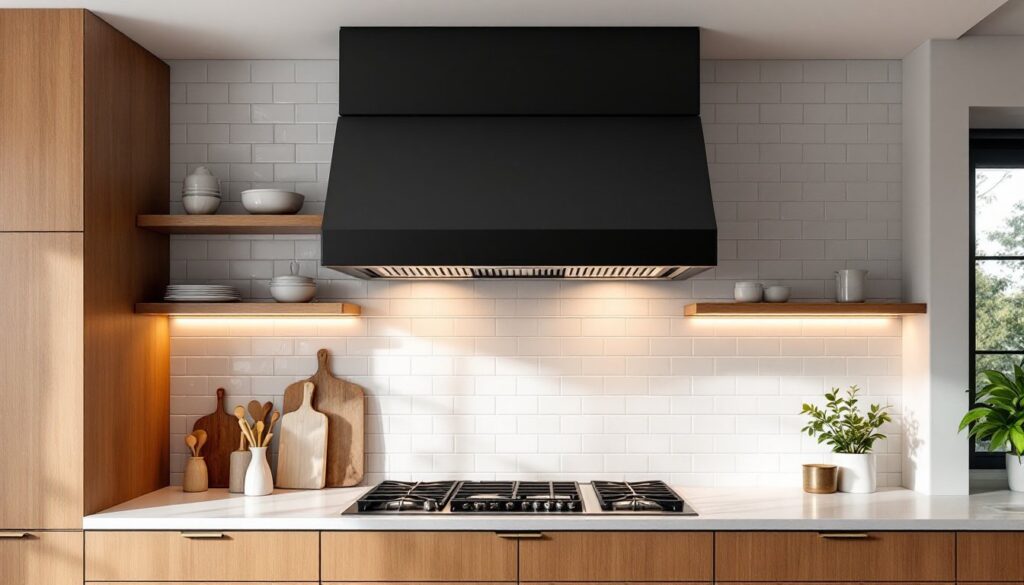
Black range hoods have moved from niche design choice to mainstream kitchen essential in recent years. Whether you’re renovating a farmhouse kitchen, updating a modern condo, or building from scratch, a black stainless steel range hood or matte black finish brings both function and visual weight to the space. Beyond aesthetics, the right black range hood handles cooking exhaust efficiently, prevents grease buildup on cabinet wood, and complements everything from subway tile backsplashes to natural wood cabinetry. If you’re considering a range hood upgrade or replacement, understanding the types, sizing, and installation basics will help you make a choice that actually works for your cooking habits and kitchen layout.
Table of Contents
ToggleKey Takeaways
- A black range hood combines aesthetic appeal with practical ventilation, hiding fingerprints and dust while creating visual contrast with modern kitchen finishes.
- Choose the right black range hood by calculating CFM requirements (12 air changes per hour) and measuring cooktop width and ceiling clearance to ensure proper fit.
- Island and wall-mounted hoods offer different design statements; island hoods require higher airflow (600+ CFM) since they can’t push exhaust toward a wall.
- Black stainless steel and powder-coated finishes outperform painted options in durability, while rigid aluminum ductwork is quieter and more efficient than flexible flex duct.
- Proper installation requires securing brackets to studs or joists, sealing penetrations with silicone caulk, and planning ducting paths before mounting the hood.
- Monthly filter maintenance and yearly ductwork inspections keep your black range hood operating efficiently while protecting cabinetry from grease and cooking odors.
The Appeal of Black Range Hoods in Modern Kitchen Design
Black range hoods dominate current kitchen design trends because they deliver contrast without clashing. A matte black or black stainless steel finish looks crisp against white subway tile, natural wood cabinetry, and light-colored countertops. Unlike polished stainless steel, which shows fingerprints constantly, black surfaces hide dust and cooking splatters between cleanings.
The visual appeal is one reason homeowners gravitate toward black hoods, but the practical benefits matter more. Black absorbs light slightly, which can make a small kitchen feel more spacious when the hood blends into the wall or cabinetry rather than standing out as a gleaming chrome eyesore. On islands, a black range hood becomes a design anchor that brings intention to the space. Designers and contractors increasingly spec black hoods alongside warm wood tones, matte hardware, and textured finishes, elements that feel collected rather than catalog-matched.
Types of Black Range Hoods to Suit Any Kitchen Layout
Range hood styles break down by installation type, and each has trade-offs in ventilation power, aesthetics, and installation complexity.
Under-Cabinet Range Hoods
Under-cabinet hoods mount directly to the bottom of wall cabinetry or soffit above your cooktop. They’re space-efficient and fit into nearly any kitchen, making them popular for renovations where you’re working within existing framing. Most under-cabinet models run 24 to 36 inches wide to match standard cooktop widths.
These hoods route exhaust through ductwork that runs up into the soffit and out through the exterior wall or roof. Ductless (recirculating) under-cabinet models exist but are less effective, they filter and return air to the kitchen rather than exhausting it outside. If you can duct yours to the exterior, that’s always the better choice. Installation requires cutting into existing cabinetry, so you’ll need to plan carefully around outlets and existing plumbing if your kitchen is tight.
Island and Wall-Mounted Options
Island hoods hang from the ceiling above a cooktop in the middle of your kitchen. They make a design statement and require clear ceiling space and a path for ductwork above. Wall-mounted hoods sit above cooktops against an exterior wall or peninsula and are easier to duct than island installations.
Island hoods demand more airflow (often 600+ CFM minimum) because they can’t push exhaust toward a wall. Wall-mounted hoods can be slightly less powerful but must still move enough air to handle cooking steam and grease. Both styles come in flat-front, chimney, or designer profiles. A black stainless steel island hood, for example, becomes a sculptural feature in an open-concept kitchen, make sure you’re comfortable with that visual weight before committing.
How to Choose the Right Black Range Hood for Your Kitchen
Sizing and airflow matter more than color, though the two should work together. Start by measuring your cooktop width and clearance above it. Most building codes require at least 18–24 inches of vertical space between your cooking surface and the hood’s underside: some appliance manufacturers specify different minimums, so check your cooktop documentation.
Calculate the CFM (cubic feet per minute) requirement: the fan must turn over your kitchen’s air 12 times per hour at minimum. Multiply your kitchen’s cubic footage by 12, then divide by 60. A 200-square-foot kitchen with 9-foot ceilings (1,800 cubic feet) needs roughly 360 CFM. Cooking-heavy households or restaurants-at-home setups benefit from 400–600 CFM or higher to handle high-heat wok cooking or heavy sautéing.
Ducting efficiency matters: rigid aluminum or stainless steel ductwork is quieter and more efficient than flexible flex duct, which restricts airflow due to internal ridges. Longer duct runs (especially with many bends) require more powerful motors. Venting through an exterior wall is simpler than routing through an attic or crawlspace: shorter, straighter ducts perform better.
For material choices, black stainless steel combines the durability of brushed stainless with low fingerprint visibility. Painted matte black is affordable but can chip if not sealed properly. Powder-coated finishes are tougher than paint and hold color longer. Stainless interiors (where air and grease flow) resist corrosion better than powder-coated internals, especially in steamy kitchens.
Noise levels vary widely. Quieter hoods (under 65 decibels) cost more but won’t drown out conversation during family dinners. Budget brands often top 75 dB, nearly as loud as a garbage disposal. Read recent reviews on kitchen design sites: testing data from Good Housekeeping and The Kitchn regularly evaluate extraction power and noise performance.
Installation Tips and Maintenance Essentials
Installation complexity depends on your kitchen layout, existing ducting, and whether you’re replacing an old hood or installing new.
Before You Start
Check local building codes and your homeowner’s association rules if applicable. Some jurisdictions require permits for exhaust ducting changes, especially if you’re cutting through exterior walls. Have your framing checked, don’t assume a soffit is solid until you confirm it’s not hiding plumbing or electrical runs.
Gather tools: a stud finder, level, drill, Forstner bits (for large round ductwork holes), drywall saw, caulk gun, and silicone caulk. You may need help, mounting a heavy island hood safely requires two people. Wear safety glasses and a dust mask if you’re cutting into existing walls or soffits.
Installation Steps
- Mark the hood’s mounting location using a level and measuring tape. Ensure it’s centered over the cooktop with proper clearance above.
- Cut ducting holes before mounting the hood itself. Use a drywall saw or hole saw appropriate to your duct diameter (typically 6–8 inches for standard residential hoods).
- Secure mounting brackets to wall studs or ceiling joists using lag bolts rated for the hood’s weight. Don’t rely on drywall anchors alone.
- Connect the hood’s internal ductwork damper to exterior ductwork with metal screws or duct straps: don’t use duct tape, which dries out over time.
- Seal all gaps and penetrations with silicone caulk (not latex paintable caulk, which shrinks). This prevents air leaks and pest entry.
- Level and secure the hood to brackets, then install filters.
If ductwork runs through unconditioned attic space, insulate it with fiberglass wrap to reduce condensation and noise.
Maintenance
Clean or replace filters monthly if you cook daily. Aluminum mesh filters are washable in the dishwasher: paper or charcoal filters must be replaced. Check dampers quarterly to confirm they open and close freely (a stuck damper lets cold air into the kitchen). Once yearly, inspect ductwork for grease buildup and clean if necessary, a duct brush and shop vac handle most deposits.
For black stainless steel finishes, wipe with a damp microfiber cloth and dry immediately to prevent water spotting. Avoid scouring pads and harsh cleaners. Bob Vila’s home maintenance guides and manufacturer instructions will clarify product-specific care if your hood has a specialty finish.
Conclusion
A black range hood isn’t just a decorative upgrade, it’s functional equipment that protects your cabinetry, keeps cooking odors from lingering, and anchors your kitchen’s visual design. Take time to measure, calculate airflow, and plan ducting before selecting a model. Honest installation planning and regular filter maintenance will keep your hood performing quietly and efficiently for years.